

The blood test designed to predict the onset of chronic kidney disease up to four years before symptoms appear.
Clinically proven
Available in SoCal
Actionable results
The current standard of care for predicting diabetes related Chronic Kidney Disease is not good enough.
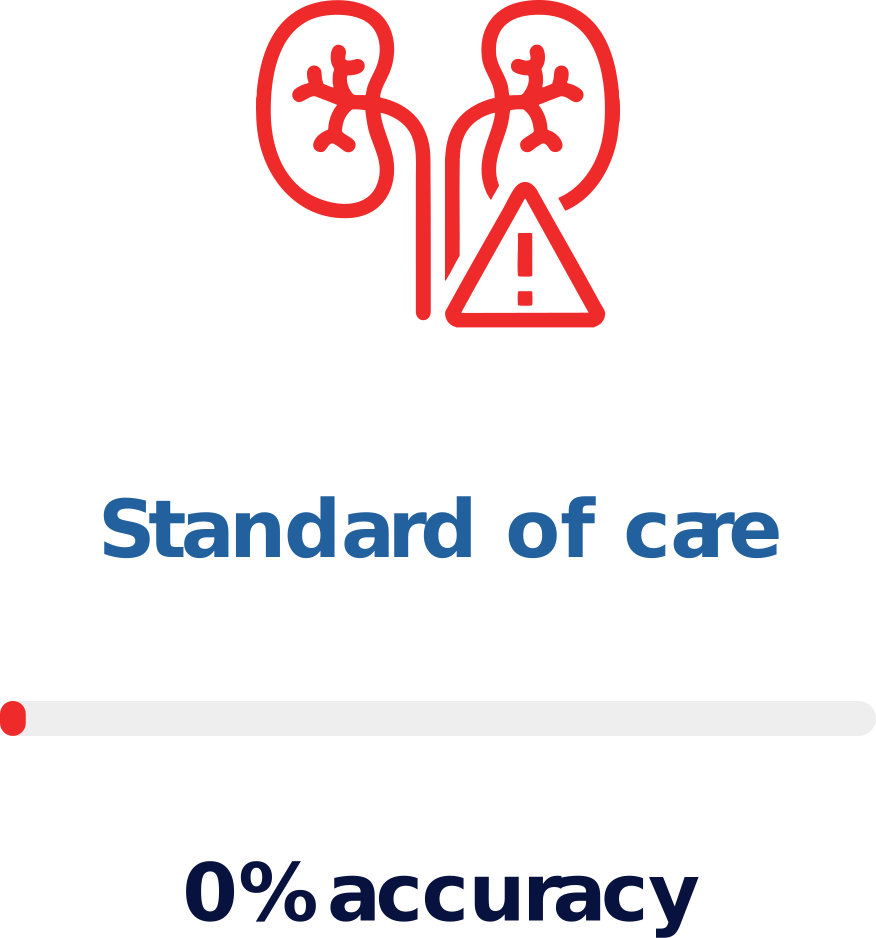
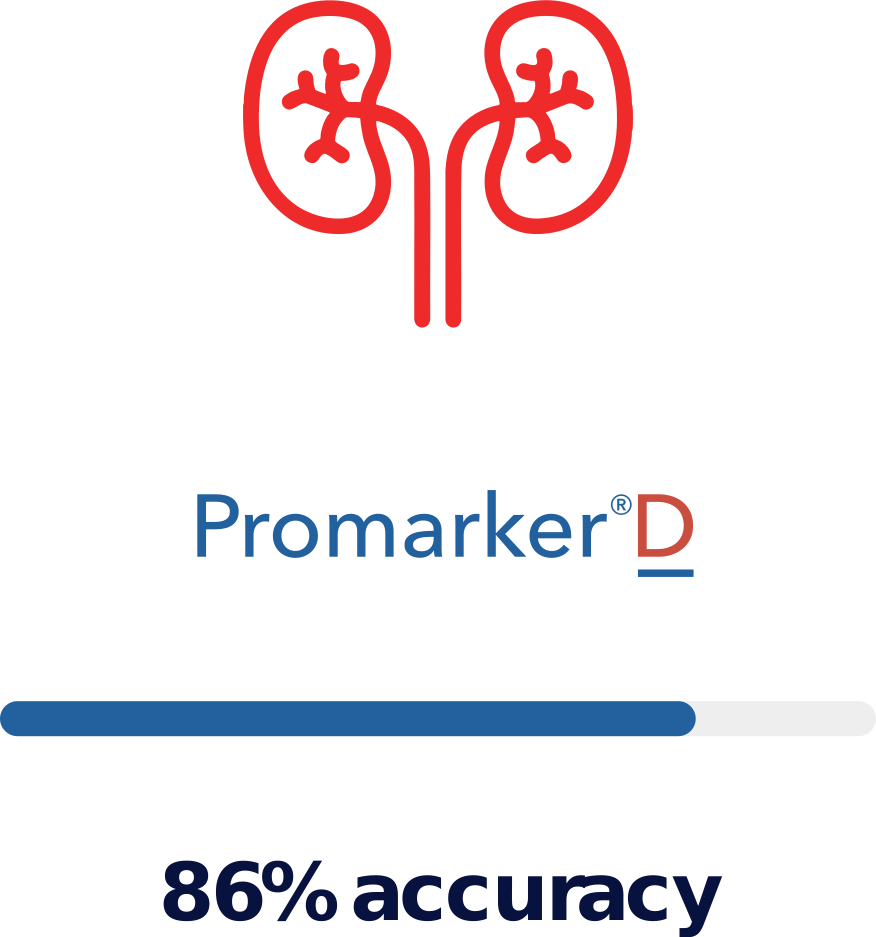
The current standard of care testing for Chronic Kidney Disease (CKD) includes a blood test (eGFR) and a urine test (uACR). These tests only provide evidence of kidney damage that has already occurred. This test is different. This test identifies kidneys under stress which will progress to CKD if not actively managed. This test correctly identified 86% of low risk patients who progressed to CKD, up to four years before traditional tests like eGFR or ACR showed any signs of damage1,2.
Early detection of diabetes related Chronic Kidney Disease (CKD) is critical.
If you have type 2 diabetes, your doctor may be monitoring your kidneys with traditional tests like eGFR or ACR, but these only detect damage after it’s already occurred. This leaves many people at risk of serious and invasive treatments over time like dialysis or transplant. Download the test requisition form by clicking below and take it to your preferred health care provider.

Get medical authorization
Download the requisition form and it take to your preferred health care provider to get medical authorization.

Standard blood draw
Schedule an appointment at one of our participating collection centers. Bring your test requisition form with you on the day.

Get answers in days
Your healthcare provider will get an email when your results are ready (within 2 to 4 weeks). They may schedule a follow-up consult with you.


This test is conducted in our US-based, CLIA-certified, CAP accredited diagnostic testing laboratory.
Privacy: Proteomics International prioritises the privacy and security of your health information at every step. We never sell or share your personal health data with third parties, and we ensure your information is stored safely and protected against unauthorised access. View Privacy Policy here.
Promarker®D is a proactive breakthrough blood test that identifies CKD risk before kidney damage begins.
Measures
Promarker®D
Your individualized future risk.
Standard test
Your current kidney damage.
Timing
Promarker®D
Up to 4 years before kidney damage occurs.
Standard test
After damage has already happened.
Interpretation
Promarker®D
Accurately identifies patients with functioning kidneys today but low to high risk of CKD within 4 years.
Standard test
Inaccurate, especially in early stages.
Action
Promarker®D
Work with your physician to start kidney health management plan early. (extending years of life)
Standard test
Try to slow the damage, and reduce the risk of lifelong dialysis or even transplant.
Developed by Proteomics International
Proteomics International is a global leader in the field of proteomics; the study of proteins to better understand disease. With over 130 years of combined experience in both academic research and biotech innovation, our teams expertise in mass spectrometry has helped transform how we detect disease before symptoms appear.
Chronic kidney disease is a major public health challenge, and Promarker©D offers a highly innovative, accurate, and accessible way to identify those most at risk. By enabling proactive management, we aim to reduce the personal and financial costs associated with this life-threatening condition.

Diabetes test receives national recognition
“Highlighted as the most prominent translational outcome in diabetes research.”


Proactively changing renal healthcare
The science behind Promarker©D
4 years early
Predicts your risk of kidney disease up to 4 years before symptoms appear.
13.5x
People with a ‘high risk’ result by Promarker®D are 13.5x more likely to develop kidney disease than a ‘low risk’ result.
86%
Proven to predict kidney disease risk with 86% accuracy.
The cost of the status quo
Acting now means investing in your health now and preventing potentially large, future expenses and significant impacts on your life.
Cost (per year)
Early detection & management:
$200-$300 for tests and early medications
Dialysis (Late stage kidney disease):
> $85,000+ (public) / $100,000+ (private)
Quality of life
Early detection & management:
Maintain a normal daily livestyle
Dialysis (Late stage kidney disease):
Multiple hospital visits a week, dietary restrictions and fatigue
Healthcare burden
Early detection & management:
Low
Dialysis (Late stage kidney disease):
Very high
Outcome
Early detection & management:
Kidney function preserved
Dialysis (Late stage kidney disease):
Lifelong dialysis treatment or even transplant
Knowledge is power
This test offers a unique advantage for individuals living with type 2 diabetes.
Early insight about your kidney health means:
-
Enjoy less anxiety and worry with a clearer understanding.
-
Have more time to act to maintain your health and lifestyle.
-
Being proactive may avoid dialysis and kidney failure in the future.
-edit.jpg?width=777&height=518&name=brooke-cagle--uHVRvDr7pg-unsplash%20(1)-edit.jpg "Happy Promarker©D patients")
Are you a medical professional?
The blood test designed to predict the onset of chronic kidney disease up to four years before symptoms appear.
Frequently asked questions
What is this test?
1 in 2 people with type 2 diabetes will develop chronic kidney disease, which can lead to dialysis or a transplant3,4,5.
The Promarker®D test can predict your risk of kidney disease years for up to 4 years before symptoms appear. Early detection helps you and your doctor take action to delay or prevent its progression.
Although your doctor may have you taking regular kidney function tests such as eGFR or ACR, these tests do not predict the onset of kidney disease.
Studies show the test is 86% accurate in predicting kidney disease. Patients identified as "high risk" by the test are 13.5 times more likely to develop kidney disease up to 4 years in advance6,7.
The Promarker®D test also helps doctors choose treatments. Patients at high risk benefit most from kidney-protecting drugs, and doctors use the results to adjust medications and monitor patients more closely8,9.
Who should take the test?
Promarker®D test is suitable for adults who have been diagnosed with diabetes (type 2) by a health professional and have an eGFR of greater than 30 mL/min/1.73m2.
What does the test measure?
The Promarker®D works by measuring protein biomarkers in your blood that are linked with kidney disease.
A scientifically proven algorithm combines these results with data about your age and eGFR (a kidney function measure). It then calculates how likely it is you will develop kidney disease in the next 4 years.
When should I do the test?
If you’re eligible, it’s never too early to take the test. In fact, early detection of kidney disease may help to slow or stop disease progression and reduce the complications associated with it10. Knowing your risk helps you and your doctor develop a plan to keep your kidneys healthy for as long as possible.
What to expect with your results?
The Promarker®D test algorithm works out a score indicating how likely it is your kidney function will decline over the next 4 years. It uses a traffic light system to classify your risk. The chronic kidney disease test algorithm works out a score indicating how likely it is your kidney function will decline over the next 4 years. It uses a traffic light system to classify your risk.
• Green = low risk of kidney disease
• Amber = moderate risk of kidney disease
• Red = high risk of kidney disease
What happens after I get my result?
You and your ordering physician will receive a copy of the test results.
You can opt to schedule a telehealth follow up consult to discuss your results or share your results with your regular doctor (managing clinician).
With this test report, your doctor can work with you to create a treatment plan to help keep your kidneys healthy for as long as possible.
Depending on the results, your doctor might suggest:
- Lifestyle changes such as healthy eating, managing your weight and quitting smoking
- More frequent monitoring
- Avoiding medicines that can damage the kidneys
- Prescribing medication designed to protect kidney function
What is type 2 diabetes?
Type 2 diabetes is a condition that affects your body’s ability to make and use insulin, a hormone that helps to regulate your blood sugar levels. This leads to a build-up of glucose (a type of sugar) in your bloodstream, leading to high blood sugar levels. Unless type 2 diabetes is well managed, the high blood sugar levels can lead to complications including heart disease, kidney damage, nerve damage, and vision problems.
What is diabetic kidney disease?
Diabetic kidney disease (DKD), also known as diabetic nephropathy, is a complication of diabetes. It affects the kidneys' ability to filter waste materials from the blood. Over time, high blood sugar levels can damage the small blood vessels and structures in the kidneys, leading to reduced kidney function. In severe cases, this can result in kidney failure.
What is chronic kidney disease?
Chronic Kidney Disease (CKD) is a long-term condition where the kidneys gradually lose their ability to filter waste and excess fluid from the blood, often without noticeable symptoms in the early stages. If left unmanaged, CKD can lead to serious complications such as high blood pressure, anaemia, heart disease, and eventually kidney failure. It’s commonly caused by conditions like diabetes and high blood pressure, and is diagnosed through blood and urine tests. While CKD can’t always be reversed, early detection and lifestyle changes can help slow its progression and reduce the risk of complications.
What is eGFR?
Estimated glomerular filtration rate (eGFR) is a measure of how well your kidneys are filtering waste from your blood. It is calculated based on your age, gender, and the level of creatinine in the blood. eGFR results help healthcare providers assess kidney function.
Am I eligible for the test?
To be eligible, you must:
-
Be 18 years of age or older
-
Have a diagnosis of type 2 diabetes from a healthcare professional
-
Have an eGFR greater than 30 ml/min/1.73m2
How do I take the test?
Follow these simple steps to take the Promarker®D test.
-
Download the test referral form.
-
Take the referral form to your health care provider to discuss your eligibility.
-
Take the signed referral form to a participating collection centre and have your blood sample taken.
-
Wait for your doctor to contact you.
How much does it cost and can I get a Medicare rebate?
The Promarker®D test is priced at $390, with a current introductory price of $199. As the test is new, it is not yet covered by Medicare or private health insurance.The Promarker®D test is priced at $390, with a current introductory price of $199. As the test is new, it is not yet covered by Medicare or private health insurance.
How long until I get my results?
Usually 2 to 4 weeks from blood collection depending on where you are located.
Do I need a doctors referral?
Yes. You can get a referral from your preferred health care provider.
How often should I take the test?
This depends on your results. Current clinical recommendations suggest the following:
- Low Risk - every 4 years
- Moderate Risk - every 2 years
-
High Risk - as determined by your doctor
Are my results and personal details kept private?
We know health information is sensitive and we take your privacy very seriously. Your test results are private and confidential.
Our laboratory system stores your personal information on highly secure, encrypted servers. This information is never shared with third parties without your explicit approval. See our Privacy Policy for further information.
References
- Peters et al., 2025. Next-Generation Promarker®D vs. Standard of Care for Assessing Kidney Function Decline in Type 2 Diabetes. American Diabetes Association Late-Breaking Poster. June 20-23. Chicago, IL. Diabetes 13 June 2024; 74 (Supplement_1): 1862-LB. https://doi.org/10.2337/db25-1862-LB
- Peters KE, Joubert IA, Bringans SD, Davis WA, Lipscombe RJ, Davis TME, Promarker®D Versus Standard of Care Biochemical Measures for Assessing Future Renal Function Decline in Type 2 Diabetes, Diagnostics 2025:15(6):662
- Thomas MC, et al. Diabetic kidney disease. Nat Rev Dis Primers. 2015;1:15018. Published 2015 Jul 30. doi:10.1038/nrdp.2015.18.
- International Diabetes Federation 2021.
- De Boer, Ian H et al. Diabetes Management in Chronic Kidney Disease: A Consensus Report by the American Diabetes Association (ADA) and Kidney Disease: Improving Global Outcomes (KDIGO). Diabetes care vol. 45,12 (2022): 3075-3090. doi:10.2337/dci22-0027.
- Peters KE, et al. Validation of a protein biomarker test for predicting renal decline in type 2 diabetes: The Fremantle Diabetes Study Phase II. J Diab Comp. 2019.
- Peters KE, et al. Diabetic kidney disease test Predicts Renal Function Decline in Type 2 Diabetes in the C***n Cardiovascular Assessment Study (CANVAS). Journal of Clinical Medicine. 2020.
- Peters KE, et al. C***n Attenuates Diabetic kidney disease test Diabetic Kidney Disease Risk Prediction Scores, Journal of Clinical Medicine. 2023.
- Fusfeld L, et al. Evaluation of the Clinical Utility of Diabetic kidney disease test In-Vitro Test in Predicting Diabetic Kidney Disease and Rapid Renal Decline. PLOS ONE. 2022.
-
UpToDate. Early detection of chronic kidney disease. Available at https://www.uptodate.com/contents/early-detection-of-chronic-kidney-disease. Accessed 5 Dec 2024.

Follow us:
6 Verdun Street, Nedlands WA, Australia 6009
Contact Us